Fall Shoulder Season: When to Switch From AC to Heat in Surprise
In Surprise and the rest of the West Valley, the switch from AC to heat usually isn't a single day on the calendar. It's a stretch of weeks where afternoons are still warm and mornings are suddenly chilly. The simplest approach: switch to heat once your home stays below your comfort setting overnight and is no longer warming up past it during the day, and do a quick heating check before that first truly cold night arrives.
What the shoulder season looks like in the West Valley
Desert air holds heat poorly once the sun goes down. That means a day that feels like summer at lunchtime can turn into a cool, dry evening. Your home also lags behind the weather. Walls, roofs and attics that soaked up heat all summer can keep indoor rooms warm for a while, even when it's cool outside, and then the house cools down overnight and stays cool into the morning.
That lag is why so many homeowners find themselves flipping between COOL and HEAT in the same day this time of year.
Signs it's time to switch from AC to heat
- Your AC has stopped running much. If the system rarely kicks on in cooling mode, even in the afternoon, the cooling season is winding down.
- Your home is waking up cold. If indoor temperatures are dropping below where you're comfortable overnight, it's time to let the heat take over.
- The forecast shows a cold front. When overnight lows are about to drop, switch over and test the heat a day or two ahead rather than the night you need it.
Should you use Auto mode?
Many thermostats have an Auto (or Heat/Cool) setting that lets the system choose heating or cooling on its own. You set a heating point and a cooling point, and the thermostat stays idle in the range between them.
When Auto mode helps
- You'd rather not touch the thermostat twice a day.
- You keep a comfortable gap between the two settings, so the system isn't switching back and forth for small changes.
When manual switching is better
- Your heating and cooling settings are set too close together, which can lead to the system starting and stopping more than it needs to.
- You'd prefer to ride out warm afternoons with a ceiling fan or open window instead of running the AC.
- Your thermostat is older and doesn't offer an Auto option.
Either way, avoid making big jumps on the thermostat. Setting the heat much higher than you want won't warm the house faster; it usually just runs the system longer.
Quick checks before the first cold night
Whatever mode you use, it's smart to confirm your heat works before you actually need it. These checks take a few minutes.
1. Give the heat a short test run
Switch the thermostat to HEAT and set it a few degrees above the current room temperature. Within a few minutes you should feel warm air at the vents. If nothing happens, check that the thermostat has power or fresh batteries and that the breaker for the system hasn't tripped.
2. Expect a brief dusty smell
A light, dusty or slightly burnt smell for a short time after the first heating cycle is normal. It's dust burning off parts that sat unused all summer. If the smell doesn't fade, smells like gas, or smells electrical, turn the system off and call for service.
3. Know what's normal for your system type
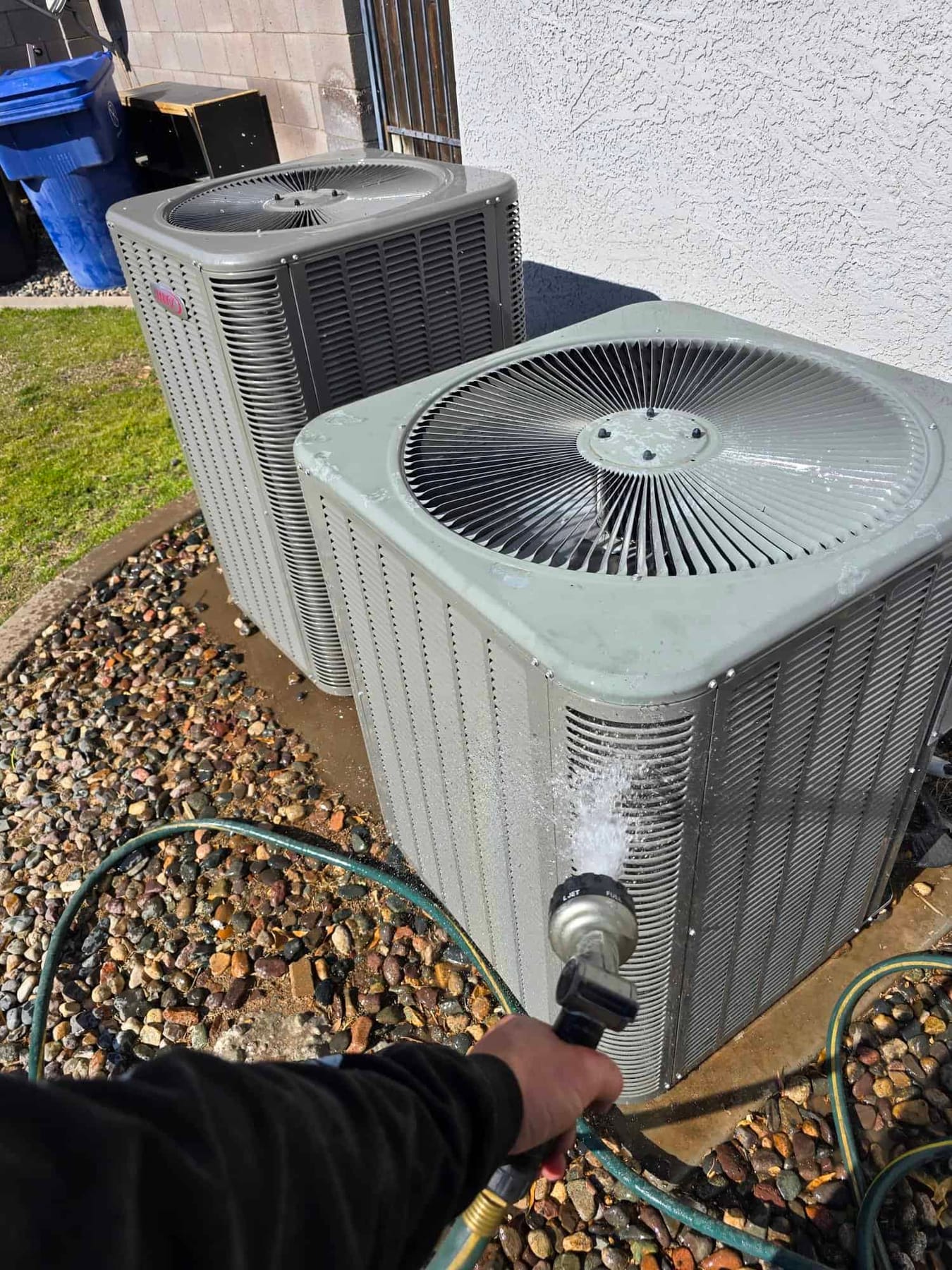
- Heat pumps: The outdoor unit runs in heating mode too. The air from the vents often feels warm rather than hot, and that's expected. You may also notice the outdoor unit pause and release some steam on colder mornings while it runs a defrost cycle. If your thermostat shows Emergency Heat or Aux Heat running often on mild nights, have it checked.
- Gas furnaces: You should hear the system start, then the burners light, then the blower come on. Any gas smell, repeated clicking without ignition, or the system shutting off right after it starts is a reason to call.
4. Check or replace your air filter
After a long cooling season and monsoon dust, filters often need replacing. A clogged filter restricts airflow, which can make heating less effective and harder on the equipment. If you can't see light through it, swap it out.
5. Test your carbon monoxide alarms
If your home has any gas appliances, including a gas furnace, water heater or range, make sure your carbon monoxide alarms are working. Press the test button and replace batteries as needed. If an alarm goes off, get everyone outside and call 911 or your gas utility before calling for service.
When to call a professional
Some issues are worth a service call rather than more troubleshooting:
- No warm air after a test run, even with power and a clean filter
- A gas smell, an electrical burning smell, or a dusty smell that doesn't go away
- The system turning on and off every few minutes
- Emergency or auxiliary heat running constantly on a heat pump
- A carbon monoxide alarm sounding
Our team handles heating repair in Surprise and the surrounding West Valley. If your system is working but hasn't been looked at in a while, a furnace maintenance visit before winter can catch small problems early. For regular seasonal visits, see our maintenance memberships. For a general idea of service pricing, see our cost guide.
Frequently asked questions
Is it bad to switch between heat and cool in the same day?
It won't harm a healthy system, but frequent switching can mean more starts and stops than necessary. Using Auto mode with a comfortable gap between settings, or riding out mild afternoons with fans and open windows, is usually easier on the system and on you.
Why does my heat pump blow air that feels only lukewarm?
Heat pumps deliver warm air over longer, steady cycles instead of short blasts of very hot air like many gas furnaces. Lukewarm air that slowly warms the house is normal. If the house never reaches your setting, have it checked.
Do I need heating maintenance if I barely use my heat?
Yes, it's still a good idea. Heating equipment that sits idle for months can collect dust, and gas furnaces in particular should be checked for safe operation before regular use. A seasonal visit is a good time to make sure everything is ready.
What should I do if my carbon monoxide alarm goes off?
Leave the home right away with everyone, including pets, and call 911 or your gas utility from outside. Don't go back in until responders say it's safe. Once the home is cleared, call us to inspect your heating system and gas appliances.
Ready for cooler nights?
If your heat isn't acting right, or you'd like a check before the first cold front rolls through, our team at Pro Solutions Air is here to help homeowners across Surprise and the West Valley. Give us a call at (844) 943-6498 to schedule a visit.