
How to Flush Your Water Heater Before Winter: A West Valley Guide
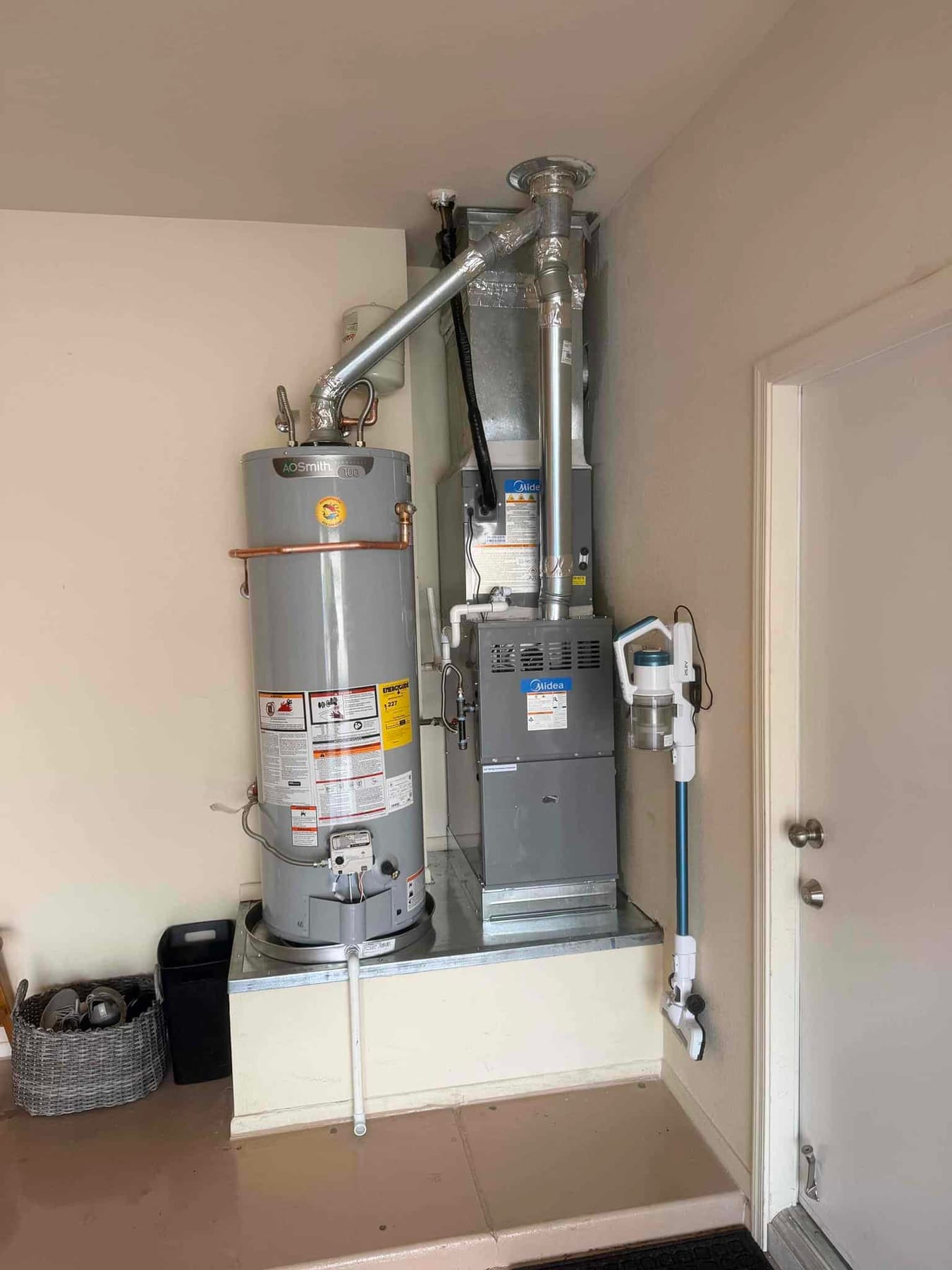
Yes, late fall is one of the best times to flush a tank water heater in Surprise and the West Valley. Our hard water leaves mineral sediment in the bottom of the tank, and clearing it out before winter helps the heater warm water more efficiently right when your household starts asking for longer, hotter showers. Most homeowners can do a basic flush in about an hour, but there are a few safety steps you shouldn't skip.
Why sediment builds up in West Valley water heaters
Valley water carries dissolved minerals, mostly calcium and magnesium. When it's heated in a tank, some of those minerals settle on the bottom as a gritty layer that thickens over time.
Sediment causes several problems:
- It insulates the water from the heat source. On a gas heater, the burner sits under the tank, so a crusty layer between the flame and the water means the burner has to run longer to do the same job. On an electric heater, the lower element can become buried in sediment.
- It makes noise. Popping, rumbling or crackling sounds when the heater runs are often caused by water trapped under sediment flashing into steam.
- It takes up space. A thick layer reduces how much hot water the tank holds.
- It stresses the tank. Overheating at the bottom of the tank can shorten the life of the lining and the tank itself.
We covered the bigger picture of how local water affects plumbing in our post on how Valley water systems impact your water heater and pipes. Flushing is the most practical, hands-on step you can take to fight that buildup.
Why flush before winter?
During the summer, incoming water from the street is already warm, so your water heater doesn't have to work very hard. Once nights cool off in November and December, the water entering your home gets colder, and the heater has to raise its temperature much further.
Flushing now also means that if something turns up, like a valve that won't close, you find out on your schedule instead of on a cold morning with a full house.
How to flush a tank water heater, step by step
These steps apply to most standard gas and electric tank water heaters. Always check your heater's manual first, since some models have specific instructions.
1. Turn off the heat source
- Gas: Turn the gas control knob to "Pilot" or "Vacation" (or "Off," per your manual) so the burner won't fire while you work.
- Electric: Switch off the water heater's breaker at your electrical panel. Never run an electric heater with the elements exposed above the water line, as they can burn out quickly.
2. Shut off the cold water supply
Close the cold water valve on the pipe going into the top of the heater.
3. Let the water cool
The water in the tank is hot enough to scald. Waiting a few hours, or even overnight, after turning off the heat makes the job much safer. If you can't wait, use extra care and keep hands and feet clear of the discharge.
4. Connect a hose to the drain valve
Attach a standard garden hose to the drain valve near the bottom of the tank. Run the other end to a driveway, floor drain or other spot that can handle warm, cloudy water.
5. Open a hot water faucet and the drain valve
Open a hot water tap inside the house to let air into the system so the tank drains smoothly. Then open the drain valve slowly. Expect the first water out to be cloudy or full of white or tan grit.
6. Flush with fresh water
Once the tank is mostly drained, briefly open the cold water supply valve with the drain still open. This stirs up the sediment at the bottom and pushes more of it out. Repeat a few times until the water from the hose runs mostly clear.
7. Refill and restore power or gas
Close the drain valve, remove the hose and open the cold water supply fully. Leave the indoor hot water faucet open until water flows steadily without sputtering, which means the air is out and the tank is full. Only then turn the gas back to its normal setting or switch the breaker back on.
8. Check for leaks
Watch the drain valve and the connections at the top of the tank for drips over the next day.
When to stop and call a professional
Flushing is a reasonable DIY job, but some situations call for a licensed plumber:
- The drain valve is stuck or brittle. Older plastic drain valves can crack when forced. If it won't open easily, stop before you break it.
- Very little water comes out. A drain that's clogged with heavy sediment may need more than a garden hose to clear.
- The water stays rusty. Rust-colored water after a flush can point to corrosion inside the tank or a worn-out anode rod.
- You notice moisture under the tank. Water pooling around the base, especially from the tank body itself, is often a sign the tank is failing.
- You smell gas. Leave the area, don't operate switches, and call your gas utility from outside.
What about tankless water heaters?
Tankless units don't collect sediment in a tank, but hard water still leaves scale inside the heat exchanger. Instead of draining, a tankless heater is descaled by circulating a cleaning solution through it using service valves and a small pump. Skipping it can lead to error codes and reduced flow, so check your manual or have a technician handle it.
Other quick water heater checks while you're at it
- Test the temperature and pressure relief valve. Lift the lever briefly to make sure water flows out of the discharge pipe, then let it snap back. If it drips afterward or won't open, have it replaced.
- Check the thermostat setting. Many homeowners find around 120°F is a comfortable and safe setting. Follow your manufacturer's guidance.
For homeowners who'd rather not keep track of all this, our maintenance memberships help keep regular home system care on the calendar. You can learn more about our water heater repair and replacement services on our plumbing page, and see our plumbing pricing.
Frequently asked questions
How often should I flush my water heater in Surprise?
Many manufacturers recommend flushing a tank water heater at least once a year. Because West Valley water is hard, some homeowners choose to flush more often. Your heater's manual is the best guide for your specific model.
Is it normal for my water heater to make popping sounds?
Popping or rumbling usually means sediment has built up at the bottom of the tank. A flush often quiets it down. If the noise continues after flushing, have a plumber take a look, since heavy buildup may have already affected the tank.
Can flushing an old water heater cause a leak?
It can reveal one. Sediment sometimes sits over weak spots in an aging tank, and a drain valve that hasn't been touched in years may not reseal. If your heater is older and has never been flushed, consider having a professional do it.
Does a water softener mean I don't need to flush?
A softener can greatly reduce mineral buildup, but it's still a good idea to drain and inspect the tank periodically.
Need a hand getting your water heater ready for winter?
If your drain valve is stuck, your water stays rusty, or you'd simply like a professional to flush and inspect your water heater, the plumbing team at Pro Solutions Air serves homeowners across Surprise and the West Valley. Call us at (844) 943-6498 to schedule a visit.